Ultra Trail Compote Recipe: 3 Homemade Energy Compotes
By Maxence · Published on 26 October 2026
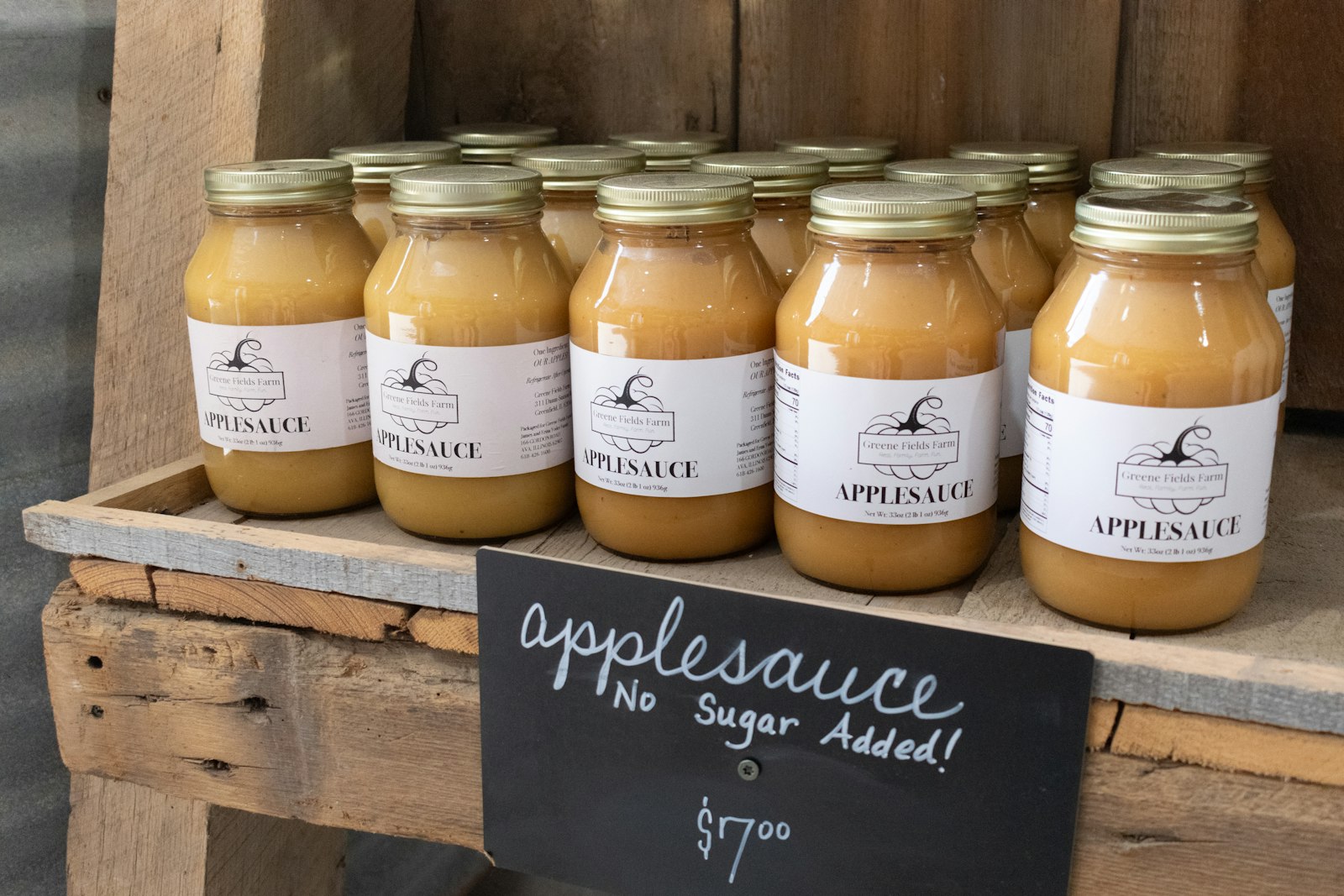
Looking for an easy homemade fruit purée recipe for ultra-trail that you can make at home? Here are three homemade energy purées you can test on your next long run: a classic apple-banana-honey, an apple-date version that's richer in carbs, and a savoury sweet potato-carrot purée to break up the monotony of sweet flavours. For each one, you'll find the quantities, the method and an estimate of the carbs and sodium per serving, calculated from reference nutritional values.
Why carry a homemade fruit purée on an ultra-trail?
Over long distances, fruit purée has several things going for it: a smooth texture you can swallow without chewing, the taste of real fruit, and a digestion that is often considered gentler than that of very concentrated gels as the hours pile up. The homemade version adds two more advantages: you control the ingredients (and so the amount of carbs and salt), and the cost per serving stays well below that of store-bought pouches.
It has its limits too. A fruit purée provides fewer carbs per gram than a gel, so you have to carry more weight for the same energy. And a homemade product doesn't keep like a sterilised industrial pouch: storage and transport take a bit of planning (see below). To compare formats, also read our article on gels, bars or fruit purées: choosing a fuelling format.
How many carbs should you aim for per hour in an ultra?
The most widely cited sports nutrition guidelines (notably the work of Asker Jeukendrup) put needs at around 30 to 60 g of carbs per hour for efforts lasting one to two and a half hours, and up to 90 g per hour for longer efforts, provided you are trained to absorb that much and combine several types of sugar (glucose and fructose, for example). These figures are general guidelines: the amount actually tolerated varies a lot from one runner to another and is something you work on in training.
With 20 to 26 g of carbs per serving, the purées below cover part of your hourly needs. In practice, you use them alongside a sports drink, gels or bars rather than as your only source of energy.
| Hourly target | Equivalent in homemade purées (≈ 23 g) | In practice |
|---|---|---|
| 30 g/h | 1 to 1.5 servings | One purée per hour + drink |
| 60 g/h | 2.5 servings | One purée + sports drink + a gel or a bar |
| 90 g/h | 4 servings | Too bulky with purée alone: combine with other formats |
Recipe 1: apple, banana and honey purée (the classic)
The simplest and most versatile, ideal for a first recipe. The banana adds texture and flavour, and the honey tops up the sugars.
Ingredients (3 servings of about 115 g)
- 200 g of unsweetened apple purée
- 1 very ripe banana (about 100 g of flesh)
- 30 g of honey
- 10 g of lemon juice (1 tablespoon)
- 1 small pinch of salt (about 0.5 g)
Method
- Peel the banana and cut it into slices.
- Blend all the ingredients until perfectly smooth, with no chunks that could clog the pouch spout.
- Divide between three reusable soft pouches and put them in the fridge.
Per serving (estimate): about 24 g of carbs and 65 mg of sodium.
Recipe 2: apple, date and maple syrup purée (the most energy-dense)
Dates are packed with natural sugars: this version provides a little more carbs per serving, with a caramelised flavour that makes a change from the classic purée.
Ingredients (3 servings of about 115 g)
- 250 g of unsweetened apple purée
- 50 g of pitted dates (about 4 to 5 dates)
- 20 g of maple syrup
- 30 ml of water
- 1 small pinch of salt (about 0.5 g)
- Optional: a hint of cinnamon
Method
- Soak the dates in hot water for 10 minutes to soften them, then drain them, keeping 30 ml of the soaking water.
- Blend the dates with the soaking water until you have a smooth paste.
- Add the apple purée, maple syrup, salt and cinnamon, then blend again for a good while.
- Divide between three pouches and keep them chilled.
Per serving (estimate): about 26 g of carbs and 65 mg of sodium.
Recipe 3: savoury sweet potato and carrot purée (to break up the sweetness)
After several hours of gels and sweet purées, many trail runners get fed up with sugar. A savoury purée provides carbs in a different form, and more sodium.
Ingredients (3 servings of about 135 g)
- 200 g of cooked sweet potato (boiled or oven-baked)
- 100 g of cooked carrot
- 80 ml of water or low-salt vegetable stock
- 15 g of honey
- 5 g of olive oil
- 1.5 g of salt (a good pinch)
- Optional: cumin or paprika
Method
- Cook the sweet potato and carrot until very tender, then let them cool.
- Blend with the water, honey, oil, salt and spices until very smooth and runny enough to go through a pouch.
- Divide between three pouches and keep them in the fridge.
Per serving (estimate): about 21 g of carbs and 195 mg of sodium.
Summary: estimated values for the three purées
| Recipe | Serving | Carbs | Sodium | Use |
|---|---|---|---|---|
| Apple, banana, honey | ≈ 115 g | ≈ 24 g | ≈ 65 mg | All long runs |
| Apple, date, maple | ≈ 115 g | ≈ 26 g | ≈ 65 mg | When you need more energy |
| Sweet potato, carrot (savoury) | ≈ 135 g | ≈ 21 g | ≈ 195 mg | Ultras, when you're sick of sweet |
These values are calculated from the average carbohydrate contents published in the USDA nutrient database (unsweetened apple purée, banana, honey, dates, maple syrup, cooked sweet potato and carrot) and from the sodium content of salt (about 393 mg per gram). They vary with the ripeness of the fruit and the brand of purée used: check the labels of your ingredients if you want a precise calculation.
Storage and transport: the rules to follow
- In the fridge: make your purées the day before or two days before, and keep them chilled, ideally for no more than two to three days.
- In the freezer: you can make batches in advance and thaw them in the fridge the day before your run.
- During the race: a homemade purée isn't sterilised like an industrial product. Take it out of the fridge at the last moment, avoid leaving it in the sun for hours, and eat it in the first hours of the race. For an ultra, hand the next pouches to your crew or put them in your drop bag when possible.
- The container: reusable soft pouches (purée pouches, 100 to 150 ml) slip into the front pockets of a vest. Wash them thoroughly after each use. To choose a vest with enough storage, see our selection of the best trail running packs and vests.
- Don't litter: an empty pouch goes back in your vest until the next aid station.
How to build purées into your nutrition strategy
- Test in training: never try a new recipe on race day. Start on a long run to check your digestive tolerance.
- Mix up the formats: purée, gel, bar and sports drink complement each other. Find our recipes for homemade energy gel and homemade energy bar.
- Drink water: even though the purée contains water, it doesn't replace hydration.
- Keep an eye on sodium: sweet purées provide little. On a long effort or in high heat, salt intake is better covered by a sports drink, savoury foods or recipe 3. Needs vary a lot with how much you sweat: if in doubt, ask a healthcare professional or a sports dietitian for advice.
What about store-bought energy purées?
If you don't have time to cook, store-bought energy purées are still convenient: they keep at room temperature and their composition is listed on the label. Here are three products featured on the site, to compare with your homemade recipes:
Three store-bought energy purées compared
Values are given per serving, based on the manufacturers' labels.
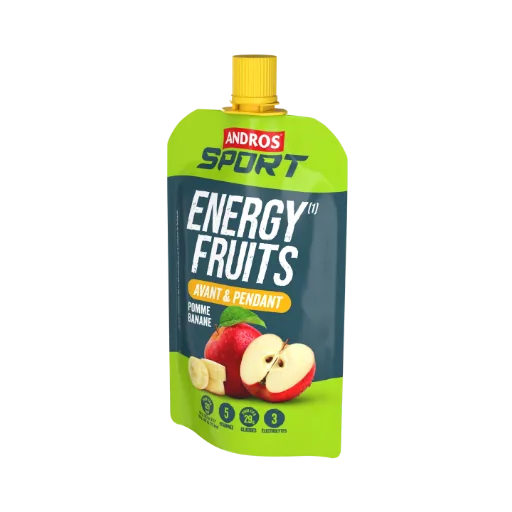
Andros Sport Purée Énergétique Pomme Banane
Apple Banana purée · 1 pouch of 114 g. 29 g of carbs per serving.
- 29 g of carbs
- 1 pouch of 114 g
- Apple Banana purée
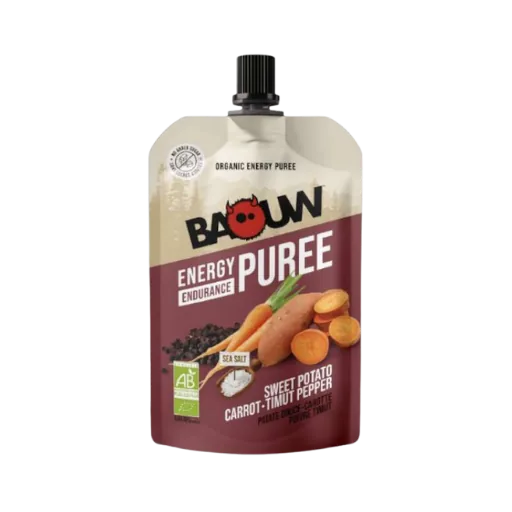
Baouw Purée Bio Patate Douce Carotte Poivre Timut
Sweet Potato Carrot Timut Pepper purée · 1 pouch of 90 g. 17 g of carbs per serving.
- 17 g of carbs
- 1 pouch of 90 g
- Sweet Potato Carrot Timut Pepper purée
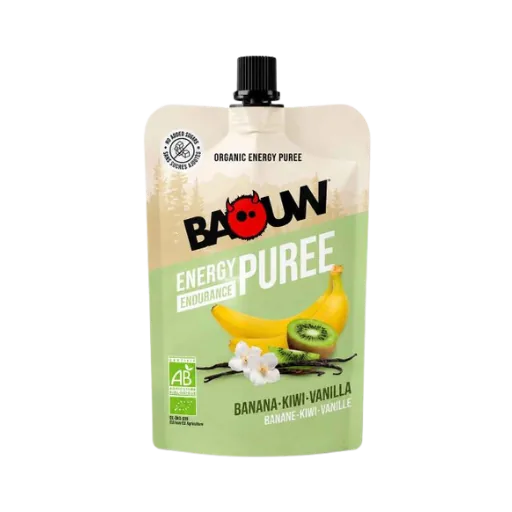
Baouw Purée Bio Banane Kiwi Vanille
Banana Kiwi Vanilla purée · 1 pouch of 90 g. 15 g of carbs per serving.
- 15 g of carbs
- 1 pouch of 90 g
- Banana Kiwi Vanilla purée
To go further, check out our comparison of the best energy purée and our full range of energy purées.
Our advice: for a first ultra, carry a mix of homemade purées (for the first few hours, while they're still nice and fresh) and store-bought pouches (for the rest of the race). You get the taste and price of homemade without taking any risk on how well it keeps.
FAQ: purée recipe for ultra-trail
Which purée should I carry on an ultra-trail?
One that's smooth, easy to swallow and tested in training. An apple-banana or apple-date base suits most runners; a savoury purée (sweet potato, carrot) lets you alternate when sweet flavours start to feel sickly.
How many purées should I take per hour of racing?
With around 20 to 26 g of carbs per serving, one purée covers part of the 30 to 60 g of carbs per hour that is generally recommended. So use it alongside an energy drink, gels or bars, adjusting to your own tolerance.
How long does homemade purée keep?
Two to three days in the fridge, longer in the freezer. During the race, take it out of the cold at the last moment, keep it away from the heat and eat it within the first few hours.
Should I add salt to an energy purée?
A small pinch improves the taste and adds a little sodium, but a sweet purée remains low in salt. On a long effort, your sodium intake also comes from your energy drink or salty foods.
Purée or gel for trail running?
Gels are more concentrated and lighter to carry; purée is often more pleasant to eat over the long haul. Many trail runners combine the two depending on the stage of the race.
Article written by Maxence. Nutritional values are estimates calculated from reference data (USDA) and the manufacturers' labels; they are no substitute for personalised advice. Always test your nutrition in training.