Winter Trail Running: How to Dress and Train in Cold Weather
By Maxence · Updated on 29 October 2026

Trail running in winter is mostly about dressing well and adapting your outings: the cold, the wind, the damp and the early nightfall change the game, but they shouldn't stop you. The key comes down to a few principles: layer thin garments rather than relying on one very warm piece, protect your extremities, choose shoes that grip, warm up for longer and stay visible. Here's how to equip and train yourself in cold weather, from the first frost to runs in the snow.
Why winter trail running takes a real strategy
In trail running, effort is uneven: you sweat on a climb, then cool down on the descent, on a wind-exposed summit or during a stop. It's this yo-yo effect, more than the temperature on the display, that makes winter tricky. Three factors make the cold feel worse:
- Wind, which makes the felt temperature drop, especially on ridges and in open terrain.
- Damp (rain, fog, slush), which makes clothing less insulating and cools you down faster.
- Night, which falls early and lowers the temperature at the end of your run.
Before heading out, check the feels-like temperature and the forecast wind, not just the thermometer, and think about the profile of your route: a run through sheltered forest isn't prepared the same way as an outing on the ridges.
What to wear: the three-layer method
The most widely used principle is to layer several thin garments, which you adjust during the run. A simple rule, common among runners: dress as if it were about ten degrees warmer than the actual temperature. You should feel a little cold at the start; after ten minutes, the effort will warm you up.
| Layer | Role | What to look for |
|---|---|---|
| 1. Base layer | Wick away sweat | Synthetic or merino wool technical top, close-fitting. Avoid cotton, which holds moisture. |
| 2. Mid layer | Insulate | Thicker long-sleeved top or a light small fleece, only when it's really cold. |
| 3. Outer layer | Block wind and rain | Lightweight windbreaker or breathable waterproof jacket, easy to stow in your vest. |
For your legs, long tights are enough in most cases; in very cold or strong wind, thicker tights or windproof overtrousers take over. The essential thing is to be able to take a layer off on the climbs and put it back on before a descent or at the summit: a trail vest with enough storage then becomes very useful (see our selection of the best trail running packs and vests).
Protecting your extremities: hands, head and feet
These are the areas that cool down fastest, because in the cold the body prioritises the core.
- Hands: thin gloves are often enough above freezing; in very cold weather, mittens or windproof over-mittens hold the heat better, since your fingers warm each other. If you use poles, check that your gloves stay compatible with the wrist strap.
- Head and neck: a thin beanie or an ear headband, and a multifunctional neck gaiter that you can pull up over your face when the air is very cold or the wind strong.
- Feet: technical socks (merino wool, for example) that keep you warm even when damp. Socks that are too thick can squeeze your foot in the shoe and cool it down instead of warming it.
Shoes: grip above all
Mud, dead leaves, wet roots, frost: in winter, grip becomes the number one criterion. Go for an outsole with deep lugs for muddy terrain, and a rubber known for its grip on wet ground. Versions with a waterproof membrane keep your feet dry in snow or puddles, but dry more slowly if water gets in from the top.
On ice or packed snow, no outsole is enough: chains or micro-spikes that slip over the shoe become essential to run safely. To choose your shoes, see our selection of the best trail running shoes.
A shoe designed for mud
Based on its specifications, a benchmark for muddy winter terrain.
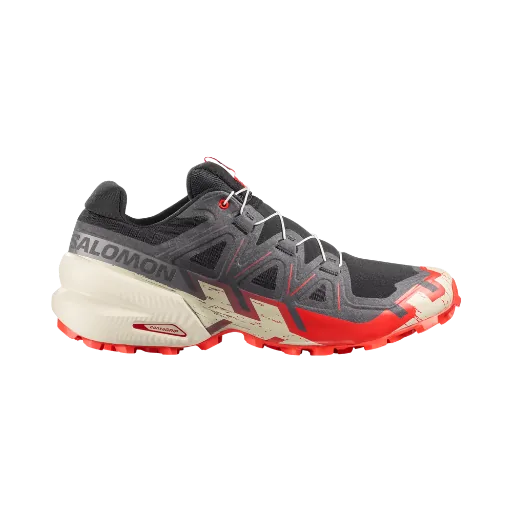
Salomon Speedcross 6
A benchmark for muddy terrain, the Salomon Speedcross 6 offers a Mud Contagrip outsole with deep lugs, a precise fit and a weight of 288 g.
- Mud Contagrip outsole
- Deep lugs
- 288 g (size 42)
- 10 mm drop
See and be seen: a headlamp becomes essential
In winter, many runs end at nightfall. Take a headlamp whenever your outing might run into dusk, even if you think you'll be back before then: a fall or a detour is enough to leave you in the dark. On the access road or in town, add reflective elements or a small flashing light at the back.
Good to know: cold reduces battery life. Start with a full battery, keep a spare battery warm close to your body on long runs, and favour adaptive lighting modes that save power. If you're new to running with a headlamp, also read our article on the first night trail run.
Three headlamps from our selection
The podium from our comparison of trail running headlamps.
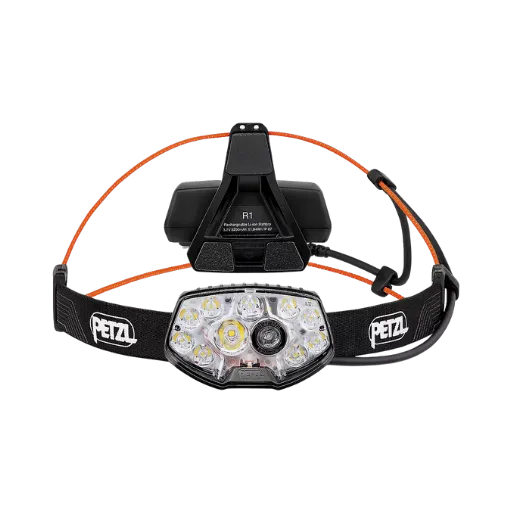
Petzl Nao RL
A high-end headlamp for night trail running, the Petzl Nao RL delivers powerful lighting, an effective Reactive Lighting mode and good comfort over time.
- Up to 1500 lumens
- Reactive Lighting adaptive lighting
- Balanced rear battery
- Long battery life
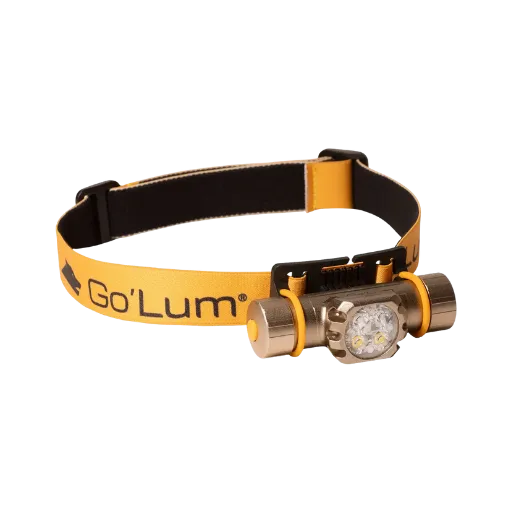
Go'Lum Piom+3
Piom+3 with a 4,000 mAh battery: 115 g with headband, 1,000 lm in manual mode and a 1,500 lm boost for 10 seconds.
- 1,000 lm; 1,500 lm boost for 10 s
- 4,000 mAh battery
- Up to 43 h in smart battery-priority mode
- 115 g with battery and headband
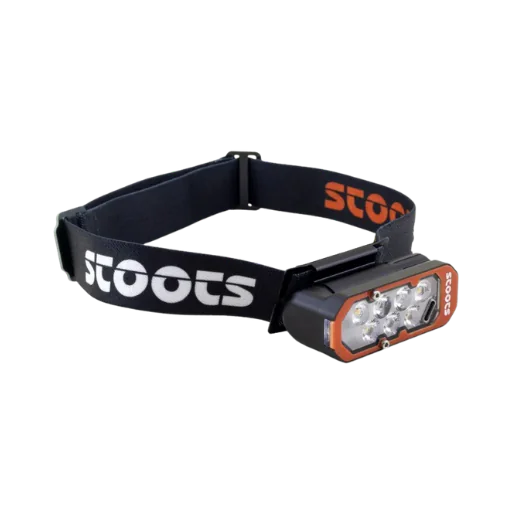
Stoots Kiska 3
A sturdy, modular headlamp, the Stoots Kiska 3 delivers precise lighting and durable construction, suited to trail running and long outings.
- Up to 1200 lumens
- 118 g with headband and battery
- Replaceable 3500 mAh battery
- 120 m beam range
The full ranking is in our comparison of the best trail running headlamps.
Drinking and eating in cold weather
- Keep drinking: the sensation of thirst is often weaker in cold weather, yet you're still sweating under your layers. Drink regularly, without waiting until you feel thirsty.
- A lukewarm drink in an insulated flask is more pleasant than ice-cold water on long runs.
- Keep your gels close to your body: in very cold weather, they thicken and become hard to swallow; an inside pocket keeps them more fluid.
- Eat regularly: fighting the cold also takes energy. For some variety, think of homemade fruit purées, with our fruit purée recipes for ultra-trail.
Training in cold weather
Warm up for longer
Muscles and tendons are stiffer in the cold. Start with a few dynamic movements indoors, then set off at a very easy pace for ten to fifteen minutes before any sustained climb or hard session.
Adapt your sessions
- Long runs are best done during the day, on loop routes that let you get home quickly if the weather turns.
- Interval sessions work well on safe, familiar terrain, such as a forest hill or a smooth path: avoid hard sessions on frozen or slippery ground.
- Judge your pace by effort rather than by the clock: mud, snow and layers of clothing naturally slow you down. Heart rate remains a good reference (see our heart rate zone calculator).
- Strength training at home is a great complement in winter, when runs are shorter.
Get warm quickly afterwards
You cool down fastest after the effort: change as soon as you finish, put on a dry layer and have a hot drink. If you're driving to your run, pack dry clothes in the boot.
Safety: cold-weather warning signs
- Frostbite: skin that turns white or waxy, numb or without feeling (fingers, nose, ears, cheeks) should be a warning sign. Get the area out of the cold and rewarm it gradually, without rubbing it.
- Hypothermia: intense shivering, unusual clumsiness or confusion are serious signs. Stop your run, take shelter, cover up and call for help if needed.
- Breathing: cold, dry air can irritate the airways. A neck gaiter over your mouth warms the air you breathe in; if you have asthma or the cold bothers you when you exert yourself, talk to your doctor.
- Tell someone your route and the time you expect to be back, carry a charged phone and an emergency blanket, especially in the mountains or when running alone.
- Know when to call it off: widespread ice, strong wind or a weather warning are good reasons to swap the run for a session at home.
The winter run checklist
| What to wear | What to carry in your vest |
|---|---|
| Long-sleeved technical top | Windproof or waterproof jacket |
| Long tights | Spare gloves or mittens |
| Technical socks | Charged headlamp |
| Beanie or headband, neck gaiter | Phone, emergency blanket |
| Shoes with good grip | Drink, something to eat, chains if icy |
Our advice: start the winter with short runs on routes you know, to test your kit and accessories. Note what you wore and how you felt depending on the temperature: within a few weeks, you'll know exactly what to put on before every run.
FAQ: winter trail running
How should you dress for trail running in cold weather?
Wear three thin layers: a technical top that wicks away sweat, an insulating layer if needed and a windproof jacket. Dress as if it were about ten degrees warmer: you should feel a little cold at the start.
Is it dangerous to run when it's very cold?
For a healthy, well-equipped person, running in cold weather is generally not dangerous. The real risks come from wind, damp, frozen ground and getting cold after the effort. If you have breathing or heart problems, ask your doctor for advice.
Which shoes for winter running on trails?
Shoes with deep lugs and sticky rubber for mud and wet conditions, possibly with a waterproof membrane for snow. On ice, add chains or micro-spikes.
Do you need to drink as much in winter as in summer?
You sweat less than in summer, but you still sweat, and you feel thirst less in cold weather. Drink regularly during your runs, without waiting until you feel thirsty.
How do you warm up when it's cold?
Start with a few dynamic movements indoors, then run for ten to fifteen minutes at a very easy pace before any sustained climb or hard session.
Article written by Maxence based on general recommendations for exercising in cold weather and on information provided by the brands. It does not replace medical advice.